

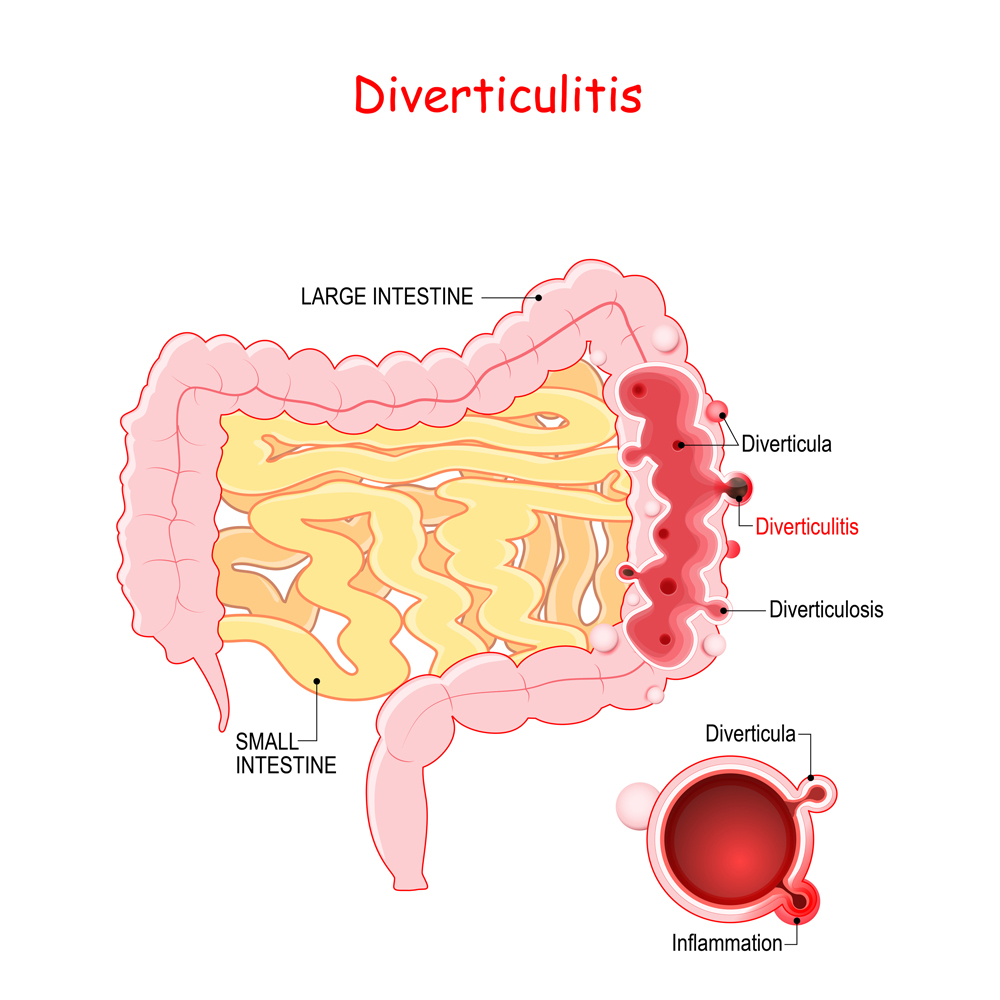
Diverticulitis is a condition where small pouches, called diverticula, form on the intestine or colon wall and become infected or swollen. The most common area affected is the sigmoid colon (in the left lower portion of the abdomen), but it is possible to have diverticulitis anywhere in the intestine or colon. At the Colorectal Division of North Carolina Surgery at UNC REX in Raleigh, diverticulitis is treated by our highly trained and experienced colorectal specialists.
Symptoms of Diverticulitis
Inflamed or infected diverticula can cause symptoms ranging from mild abdominal pain to severe inflammation or bleeding. If not properly managed, diverticulitis can cause abscesses and fistulas (connections with other organs), blockages, or tears in the colon.
Causes of Diverticulitis
Diverticula gradually develop over time, but they do not always become problematic. Researchers estimate that over 40 percent of people over the age of 60 have these pouches in some portions of their intestines. The American diet — low in natural fiber and high in processed foods — may be responsible for this increase in diverticula.
Diverticulitis Diagnosis in the Triangle Area
The most accurate test to determine the severity of diverticulitis is a computerized tomography (CT) scan. This imaging study allows us to visualize the extent of inflammation and identify potential complications like abscesses or perforations.
CT scans can also help distinguish diverticulitis from other conditions with similar symptoms, such as appendicitis or inflammatory bowel disease. In some cases, blood work or a colonoscopy may also be recommended to provide a complete picture of your condition.
Raleigh Treatment Options For Diverticulitis
For mild to moderate diverticulitis, our specialists typically use antibiotics to decrease inflammation and minimize symptoms. However, we may recommend surgery to remove the affected area if:
- Your symptoms recur or worsen over time.
- Antibiotics aren’t working.
- There is a blockage or tear.
Depending on the severity of the disease, surgery may involve removing the affected portion of the colon (colectomy). Or, in more severe cases, it may require temporarily creating an ostomy (a small opening in the abdominal wall) through which stool collects in a bag or pouch.
Related Procedures & Surgeries
Learn more about the procedures and surgeries that our team offers.
Recovery After Diverticulitis Treatment
Recovery time varies depending on the treatment approach used for your specific case. Patients treated with antibiotics typically experience improvement within a few days and can return to normal activities in under a week. Surgical recovery may take several weeks or longer, depending on the complexity of the procedure. Our team provides comprehensive post-treatment care and dietary guidance to help prevent future episodes and ensure optimal healing.
Benefits of Diverticulitis Care at UNC REX
- Advanced diagnostic imaging
- Comprehensive care from diagnosis through recovery
- Personalized treatment plans tailored to your specific condition
- Convenient Triangle area location
FAQs
Can stress cause diverticulitis?
While stress doesn’t directly cause diverticulitis, it may contribute to flare-ups by affecting digestive function and immune response. Managing stress through relaxation techniques and regular exercise could help reduce the frequency of episodes.
Is diverticulitis hereditary?
There appears to be a genetic component to the formation of diverticula, as they tend to run in families. However, lifestyle factors like diet and exercise also play significant roles in whether someone develops the condition.
Contact Us Today
Are you experiencing possible symptoms of diverticulitis in Raleigh, Durham, or Chapel Hill? Contact UNC REX Colorectal Surgery today for expert evaluation and care.