
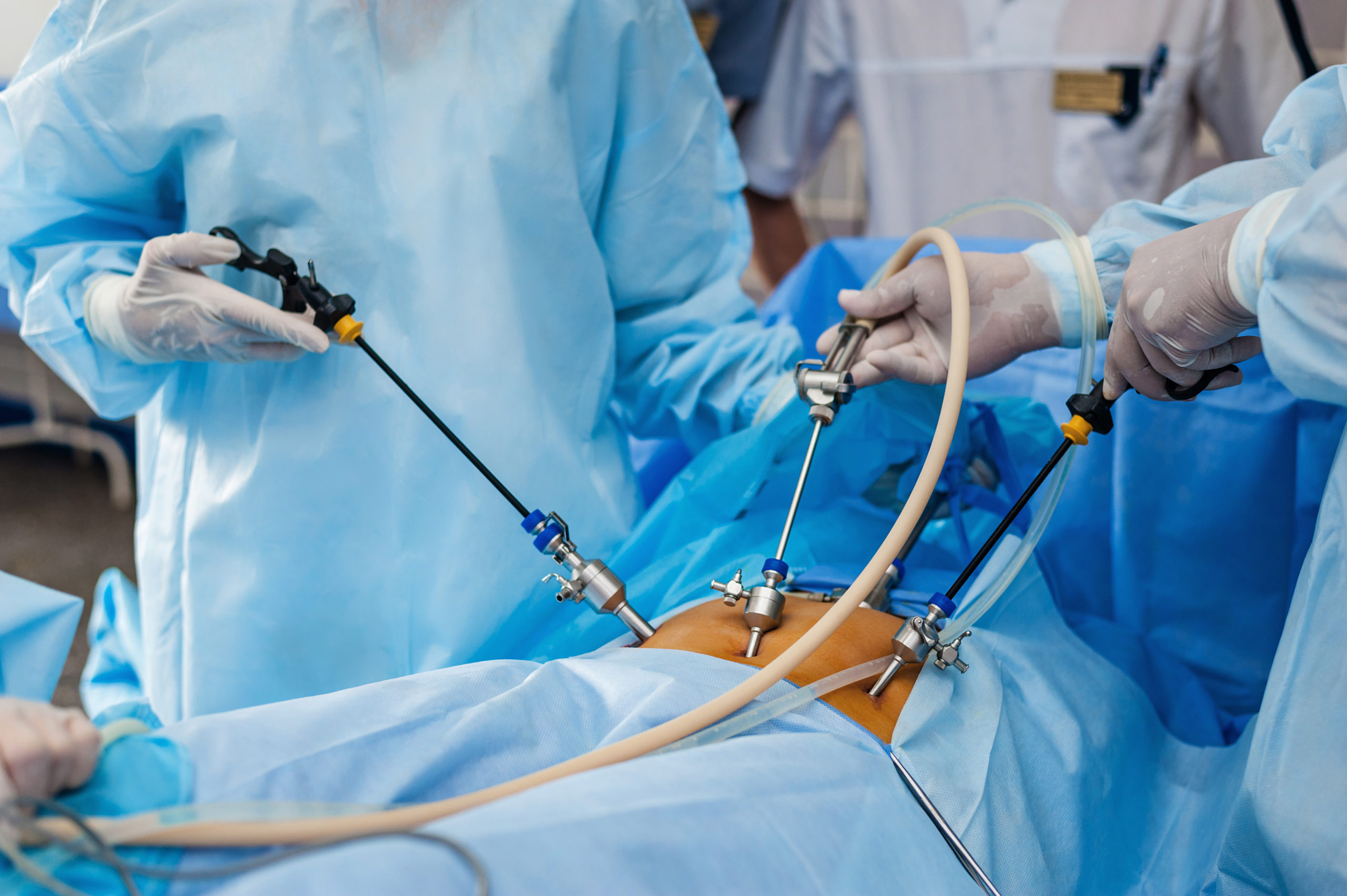
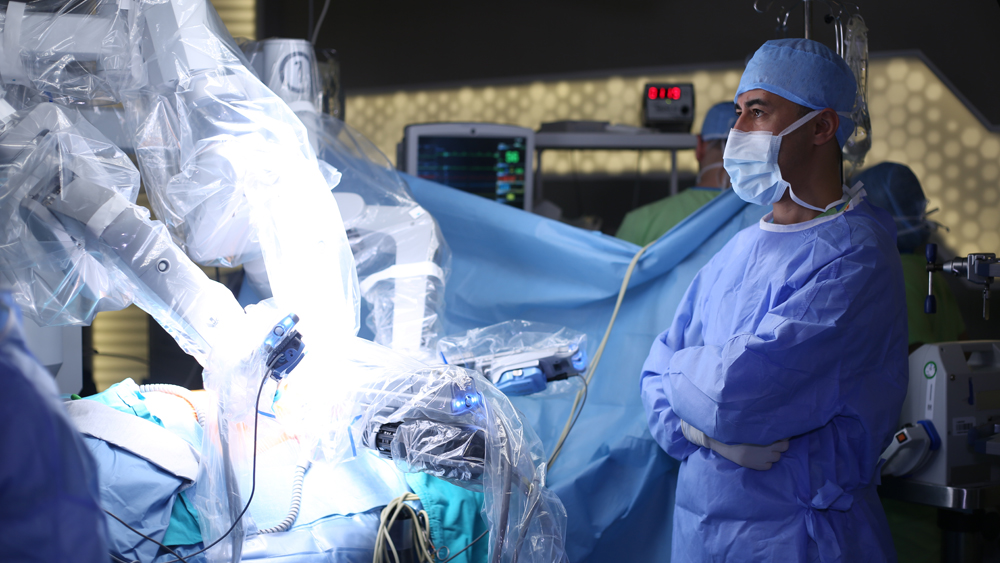
Unlike open surgery that requires a long incision to open the abdomen, minimally invasive laparoscopic and robotic surgery for colorectal diseases in Raleigh involves several small incisions – often shorter than an inch. At the Colorectal Division of North Carolina Surgery at UNC REX, our colorectal surgeons perform minimally invasive procedures using several long instruments and a long, thin camera that clearly shows the inside of the abdomen.
With smaller incisions, laparoscopic surgery offers patients a shorter recovery time, less pain, and, hopefully, a quicker return to normal life.
Why Choose UNC REX For Laparoscopic & Robotic Surgery
The Colorectal Division of North Carolina Surgery at UNC REX is a trusted leader in minimally invasive colorectal care throughout the Triangle region. As part of the nationally recognized UNC Health® system, our Raleigh practice combines access to advanced surgical technology with a deeply patient-centered philosophy. Our team is experienced in both laparoscopic and robotic techniques, offering patients throughout Raleigh, Durham, Cary, and surrounding communities a high standard of specialized care backed by one of North Carolina’s premier health systems.
Timothy Sadiq, MD, FACS
Dr. Sadiq has extensive experience across the full range of minimally invasive and open colorectal procedures. Having practiced at UNC-Chapel Hill for over a decade before joining UNC REX in 2020, he brings particular depth of expertise in inflammatory bowel disease and complex re-operative surgery, making him a trusted resource for patients facing some of the most challenging colorectal conditions.
Laura Altom, MD, MSPH
Dr. Altom is a specialist in minimally invasive surgery for colorectal cancer and diverticulitis, with advanced training that includes a fellowship at the renowned Ochsner Clinic in New Orleans. A member of our practice since 2016, she sees patients across multiple locations, including Raleigh, Cary, and Holly Springs, bringing accessible, expert laparoscopic care to communities throughout the region.
Meridith Ginesi, MD
Dr. Ginesi offers specialized training in advanced minimally invasive colorectal techniques, with fellowship experience at both University Hospitals Cleveland and the Cleveland Clinic Florida. Her surgical focus spans laparoscopic, robotic, and endoscopic technologies, and she has earned recognition for her contributions to colorectal research and surgical education on both national and international platforms.
Conditions Treated With Laparoscopic & Robotic Colorectal Surgery
Minimally invasive colorectal surgery can be used to treat a variety of conditions, including:
These procedures can also be utilized to remedy benign and malignant colorectal diseases that require partial or complete removal of affected portions of the colon or rectum.
Am I a Candidate for Robotic or Laparoscopic Surgery?
Both laparoscopic and robotic colorectal surgeries are appropriate for patients with any form of colorectal disease. Candidates must have realistic expectations and no post-surgery healing issues. Patients in the early stage of colorectal disease are usually the best candidates for colorectal surgery.
Your Surgical Consultation
During your consultation, a physical examination will be conducted to help diagnose the exact colorectal disease you are experiencing. The specialist will also evaluate your medical history. Once the actual colorectal disease has been precisely identified and the target areas assessed, we will recommend the most suitable surgical plan.
Your colorectal doctor will discuss the entire surgical plan with you. You’ll learn about the preparatory steps, the actual surgery, the recovery process, and the expected results. By the end of your consultation, you will have a schedule for your colorectal surgery.
What Happens During Laparoscopic & Robotic Surgery at UNC REX?
The general steps for each of these procedures are as follows:
Laparoscopic Colorectal Surgery
Laparoscopic surgery involves using small incisions where we insert long instruments through the abdominal wall. The surgery is performed with the aid of a laparoscope, a long, thin camera that produces a picture on a screen above the operating room table. This device allows the surgeon to operate while looking at a monitor with an enlarged, clear image of the abdomen.
Robotic Colorectal Surgery
Robotic surgery is very similar to laparoscopic surgery. The surgeon begins the procedure by creating small incisions in the patient’s abdomen and then uses a camera and long instruments to proceed. The “robot” is next to the patient; its mechanical arms hold the camera and instruments.
The surgeon sits at a high-resolution, 3D video console and uses hand controls to manipulate the robot arms to perform the surgery. Surgeons find robotic surgery a valuable tool for complex procedures.
Recovery After Laparoscopic & Robotic Surgery
The patient will be released after their condition has stabilized. Due to the nature of the procedure, the patient will experience a shorter recovery time with less pain compared to other more invasive colorectal surgeries. Recovery instructions will be provided, along with prescription medications to aid the recovery process.
A post-op appointment will be scheduled to assess the healing process and treatment results. Your specialist will also inform you when certain physical activities (like exercise and heavy lifting) are permitted.
Benefits of Minimally Invasive Colorectal Procedures
- Smaller incisions leading to reduced scarring
- Less postoperative pain
- Shorter hospital stay
- Quicker return to daily activities
- Lower risk of infection
- Reduced blood loss during surgery
- Faster overall recovery time
How Much Do These Procedures Cost?
The price of colorectal surgery will depend on the chosen procedure. The number of surgical areas will also affect the total cost. Check with your health insurance provider for details on coverage.
Schedule a Consultation Today!
If you want to learn more about laparoscopic and robotic surgery for colorectal diseases in Raleigh, visit us at the Colorectal Division of North Carolina Surgery at UNC REX. Contact us today to schedule your first appointment.
Laparoscopic & Robotic Colorectal Surgery FAQs
How does robotic surgery improve a surgeon’s precision?
Robotic surgery provides a 3D, high-definition view of the surgical site and allows the surgeon to control robotic arms with greater dexterity and steadiness than the human hand. This level of precision is especially useful for delicate colorectal procedures in tight spaces.
Can these procedures be used for emergency colorectal conditions?
Minimally invasive surgery is usually planned in advance, but in some emergency cases, such as perforations or severe infections, laparoscopic techniques could be an option. However, open surgery is often still preferred for life-threatening emergencies requiring immediate intervention.
How does weight or BMI impact eligibility for these techniques?
Patients with a high BMI may still be eligible for laparoscopic or robotic surgery, but obesity can increase surgical risks such as infection or complications. Your surgeon will evaluate whether a minimally invasive approach is the safest option for your case.
Is there a risk of converting to open surgery mid-procedure?
In some cases, a surgeon may need to convert a laparoscopic or robotic procedure to open surgery if unexpected complications arise, such as excessive bleeding or difficult anatomy. While this is not common, it’s a possibility your surgeon will discuss with you before the procedure.
How visible will my scars be after minimally invasive colorectal surgery?
Because only small incisions are made — typically less than an inch each — any resulting scars are significantly smaller and less noticeable than those from open surgery. Most scars fade considerably over time with proper care.
How does the surgical team monitor my safety during a minimally invasive procedure?
Throughout surgery, anesthesiologists and surgical nurses continuously track your vital signs, oxygen levels, and overall condition to ensure your safety. Our team is trained to respond quickly to any changes and take corrective action if needed.
Are there differences in long-term outcomes between laparoscopic and robotic colorectal surgery?
Research generally shows comparable long-term outcomes between the two approaches for most colorectal conditions, with both offering low recurrence rates and good functional results. The choice between them often comes down to the complexity of the procedure and the surgeon’s assessment of which technique best suits your case.
Related Procedures & Surgeries
Inflammatory Bowel Disease (IBD) Surgery